
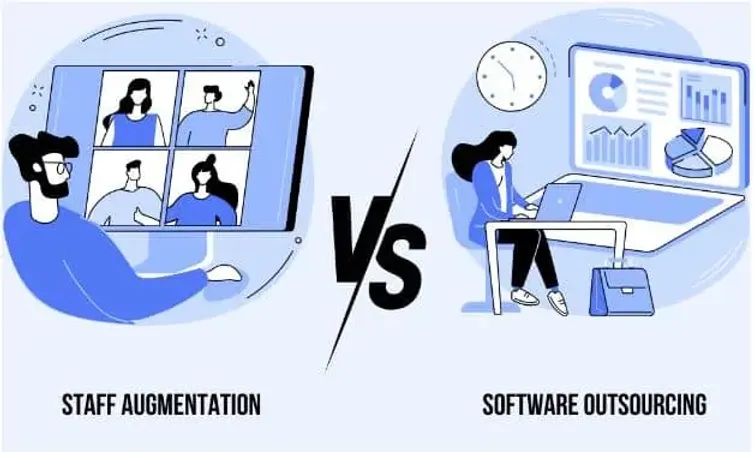
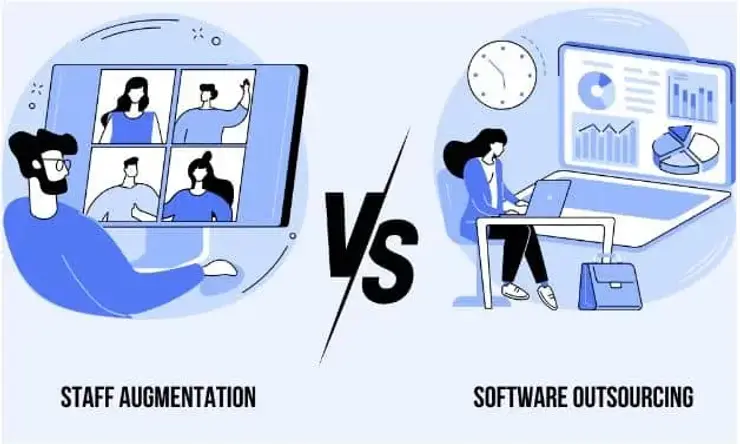
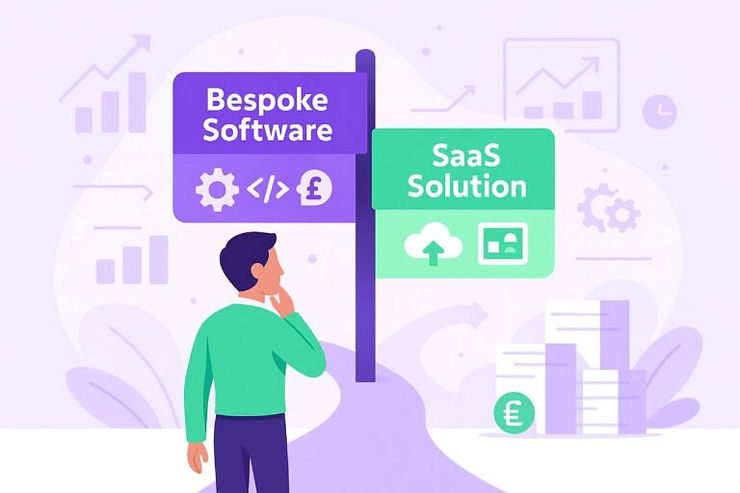
When businesses grow, they face a critical decision: should they expand their workforce or invest in technology? The debate around bespoke software vs hiring staff is becoming increasingly important as companies look for smarter ways to scale without inflating operational costs.
Both approaches have value, but their long-term impact on efficiency, scalability, and business cost optimisation can be dramatically different.
Understanding the Core Difference
At its simplest, the comparison comes down to this:
- Hiring staff increases human capacity
- Bespoke software increases system efficiency through automation
While hiring adds more people to handle workload, bespoke software improves processes so fewer people can achieve more.
This is where the discussion of automation vs hiring becomes essential.
Below is a clear breakdown of how both strategies perform across major business factors:
Factor
Hiring More Staff
Bespoke Software Solutions
Cost Structure
Recurring salaries, training, benefits
One-time + maintenance cost
Scalability
Limited by recruitment speed
Highly scalable instantly
Efficiency
Varies by individual performance
Consistent system-driven output
Error Rate
Higher due to human factors
Lower due to automation
Long-term ROI
Increases with headcount
Improves over time
Flexibility
Slower adaptation
Fast process updates
The True Cost of Hiring More Staff
Hiring seems like the simplest solution when workload increases. However, it comes with hidden costs:
- Recruitment and onboarding expenses
- Training and management time
- Office space and infrastructure
- Payroll taxes and benefits
- Higher risk of inconsistency in performance
As teams grow, coordination becomes more complex, which can reduce overall productivity instead of improving it.
How Bespoke Software Changes the Equation
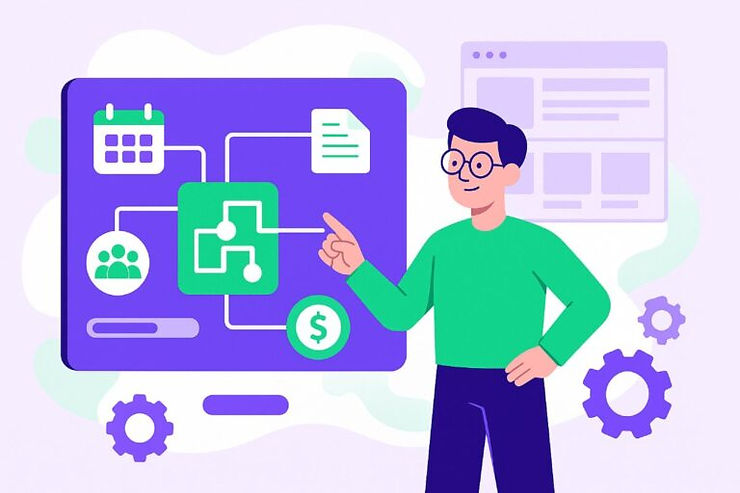
Investing in technology shifts the focus from increasing headcount to improving systems. Bespoke software solutions are designed to match your exact workflows, allowing businesses to automate repetitive tasks and streamline operations.
Key benefits include:
- Automated data processing
- Reduced manual workload
- Faster decision-making
- Improved accuracy
- Lower long-term operational costs
This is where business cost optimisation becomes significantly more effective.
Automation vs Hiring: Which Scales Better?
When comparing automation vs hiring, scalability is the deciding factor.
Hiring Scalability:
- Linear growth (more staff = more output)
- Slower onboarding process
- Increased management complexity
Automation Scalability:
- Non-linear growth (systems handle increasing demand)
- Instant deployment across teams
- Minimal incremental cost
Automation allows businesses to grow without proportionally increasing expenses.
Real-World Example: Scaling a Customer Support Team
Imagine a company receiving 1,000 support tickets per day.
Option 1: Hiring More Staff
- Add 10–15 new agents
- Train them for weeks
- Increase monthly payroll significantly
Option 2: Bespoke Software Automation
- Implement automated ticket routing
- Use AI chat responses for common queries
- Reduce human workload by 40–60%
Over time, the second option results in faster response times and lower operational costs.
When Hiring Still Makes Sense
Despite the advantages of automation, hiring is still important in certain cases:
- Roles requiring creativity and emotional intelligence
- Strategic leadership positions
- Complex decision-making tasks
- Customer relationship management
The best approach is not replacing humans entirely, but balancing automation with skilled employees.
Internal Strategy Integration
Businesses looking to modernise operations can explore tailored systems here:bespoke software solutions
These solutions help companies reduce dependency on manual processes and improve overall efficiency.
Long-Term Business Impact
Choosing between bespoke software vs hiring staff is not just a cost decision—it’s a strategic direction.
Long-term advantages of software investment:
- Predictable operational costs
- Faster business scaling
- Reduced dependency on workforce availability
- Higher consistency in output
- Better resource allocation
Over time, automation strengthens competitiveness in almost every industry.
External Industry Insights
Several global organizations highlight the shift toward automation-driven growth:
- McKinsey Digital Transformation Insights — research on automation and productivity gains
- World Economic Forum Future of Work — analysis of workforce automation trends
- Deloitte Business Automation Reports — studies on cost optimisation through digital systems
These reports consistently show that automation delivers stronger long-term efficiency than workforce expansion alone.
Conclusion
The debate around bespoke software vs hiring staff ultimately comes down to efficiency versus expansion. Hiring increases capacity, but bespoke software transforms how work is done.
By prioritising automation vs hiring, businesses can achieve smarter business cost optimisation, reduce operational inefficiencies, and scale sustainably.
The most successful companies are not choosing between people or software—they are strategically combining both to build resilient, efficient systems.