
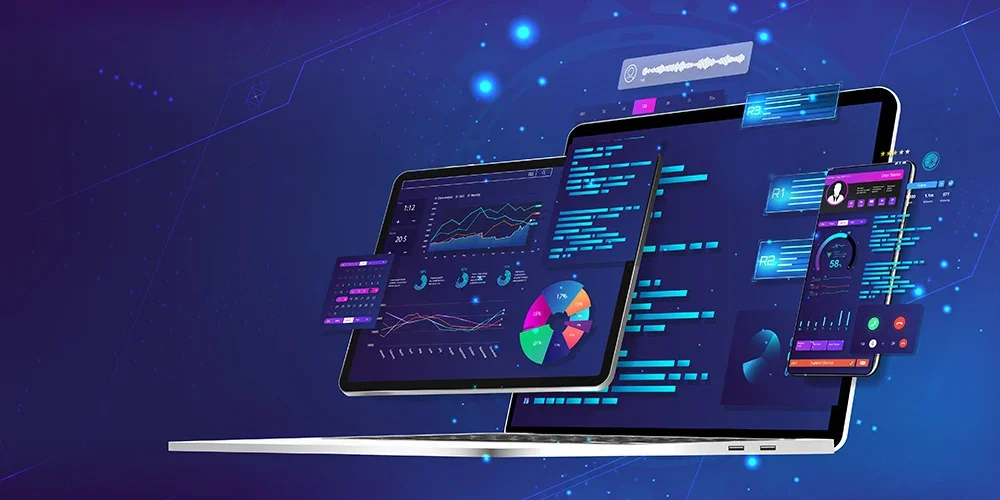
In today’s fast-moving digital economy, bespoke software decision making has become a critical advantage for organizations seeking accuracy, speed, and data-driven growth. Unlike off-the-shelf tools, bespoke systems are tailored specifically to a company’s workflows, enabling deeper insights and smarter strategic choices.
Modern businesses increasingly rely on business intelligence software and reporting automation to transform raw data into actionable intelligence.
The rise of bespoke software decision making is reshaping how leaders interpret data, forecast trends, and respond to market changes in real time.
Why Bespoke Software Decision Making Matters
The core strength of bespoke software decision making lies in customization. Every organization generates unique data, and generic tools often fail to capture its full value.
Key advantages include:
- Real-time data visibility
- Tailored dashboards for executives
- Automated reporting workflows
- Improved forecasting accuracy
- Faster response to market changes
According to industry insights from Gartner:Gartner Analytics Researchdata-driven organizations outperform competitors by making faster and more accurate decisions.
How Bespoke Software Enhances Decision Making
1. Real-Time Data Processing
With bespoke software decision making, businesses can analyze live data streams instead of relying on outdated reports.
2. Centralized Data Systems
All business data is unified into one platform, improving clarity and reducing duplication.
3. Automated Reporting
Using reporting automation, companies eliminate manual reporting delays and human error.
4. Predictive Analytics
AI-powered models forecast trends and improve strategic planning.

Table: Bespoke Software vs Off-the-Shelf Systems
Feature
Off-the-Shelf Software
Bespoke Software Decision Making
Flexibility
Limited customization
Fully tailored to business needs
Data Insights
Generic dashboards
Advanced real-time analytics
Integration
Restricted APIs
Seamless system integration
Reporting
Manual or basic automation
Advanced reporting automation
Scalability
Moderate
High and adaptable
This comparison clearly shows why bespoke software decision making is becoming the preferred choice for growing enterprises.
Role of Business Intelligence Software
Modern bespoke software decision making heavily depends on advanced analytics tools such as business intelligence software.
Popular platforms include:
- Microsoft Power BI
- Tableau Analytics
These tools allow organizations to visualize complex datasets, identify trends, and improve decision accuracy.
Reporting Automation and Efficiency
One of the strongest advantages of bespoke software decision making is automation.
Benefits of reporting automation:
- Eliminates manual spreadsheet work
- Reduces human error in reporting
- Speeds up executive decision cycles
- Provides consistent data formatting
- Enhances operational transparency
By integrating reporting automation, companies can focus more on strategy rather than data preparation.
Real-Time Insights for Better Strategy
Real-time analytics is the backbone of bespoke software decision making. Businesses no longer need to wait for monthly reports.
Instead, they can:
- Monitor live performance dashboards
- Detect anomalies instantly
- Adjust strategies in real time
- Improve customer experience immediately
This agility creates a significant competitive advantage.
Common Use Cases of Bespoke Software Decision Making
- Financial forecasting in banking
- Supply chain optimization in logistics
- Customer behavior analysis in retail
- Risk management in insurance
- Performance tracking in SaaS companies
Each of these industries benefits from bespoke software decision making by gaining precise, actionable insights.
Challenges Solved by Bespoke Systems
Organizations often struggle with:
- Fragmented data sources
- Slow reporting cycles
- Poor visibility into KPIs
- Lack of predictive insights
Bespoke software decision making directly addresses these challenges by unifying and automating data workflows.
The Future of Decision Making in Business
The future of enterprise intelligence is deeply connected to bespoke software decision making. As AI and machine learning evolve, decision systems will become even more predictive and autonomous.
Key future trends include:
- AI-driven decision engines
- Fully automated reporting ecosystems
- Hyper-personalized dashboards
- Real-time predictive simulations
Final Thoughts
In a data-driven economy, bespoke software decision making is no longer optional—it is essential. Businesses that invest in tailored systems gain a significant edge in speed, accuracy, and strategic clarity.
By combining business intelligence software, reporting automation, and real-time analytics, organizations can transform raw data into powerful decisions that drive growth.