
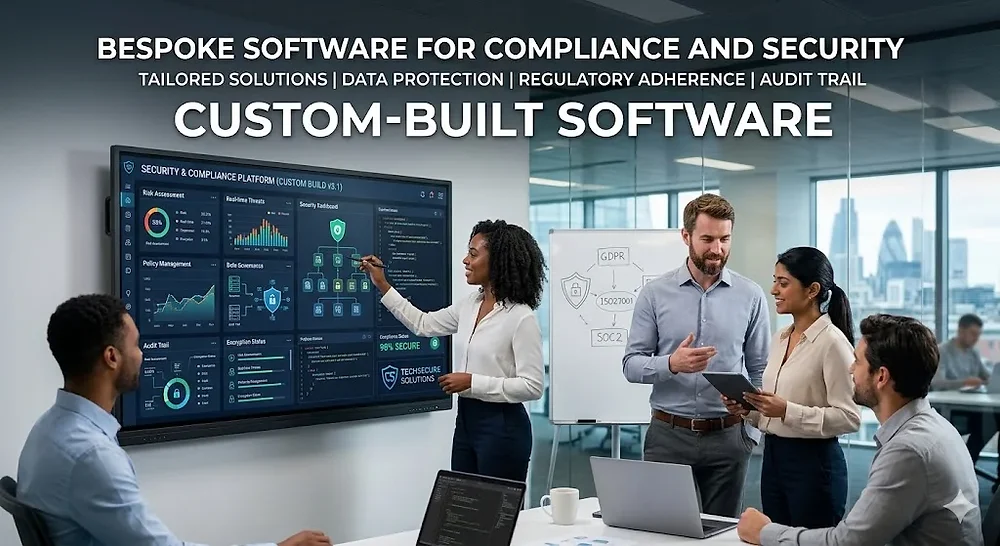
Modern businesses face increasing pressure to protect sensitive information while meeting strict industry regulations. Investing in bespoke software compliance solutions allows organisations to strengthen security, automate compliance processes, and reduce operational risks. Unlike off-the-shelf applications, custom-built systems are designed around specific business requirements, providing greater control over data protection, regulatory reporting, and internal workflows.
At Devectus, organisations gain access to tailored software solutions that improve efficiency, support compliance initiatives, and enhance long-term business performance through secure and scalable technology.
As regulations continue to evolve across industries, businesses are increasingly adopting data security software and compliance automation tools to minimise human error, improve audit readiness, and ensure ongoing regulatory adherence.
Complete Guide Navigation
- 1. Understanding Bespoke Software Compliance
- 2. Security Advantages of Custom Software
- 3. Compliance Automation Benefits
- 4. Supporting Business Growth Securely
- 5. The Role of Ongoing IT Support
- 6. Bespoke vs Off-the-Shelf Software
- 7. Frequently Asked Questions
1. Understanding Bespoke Software Compliance
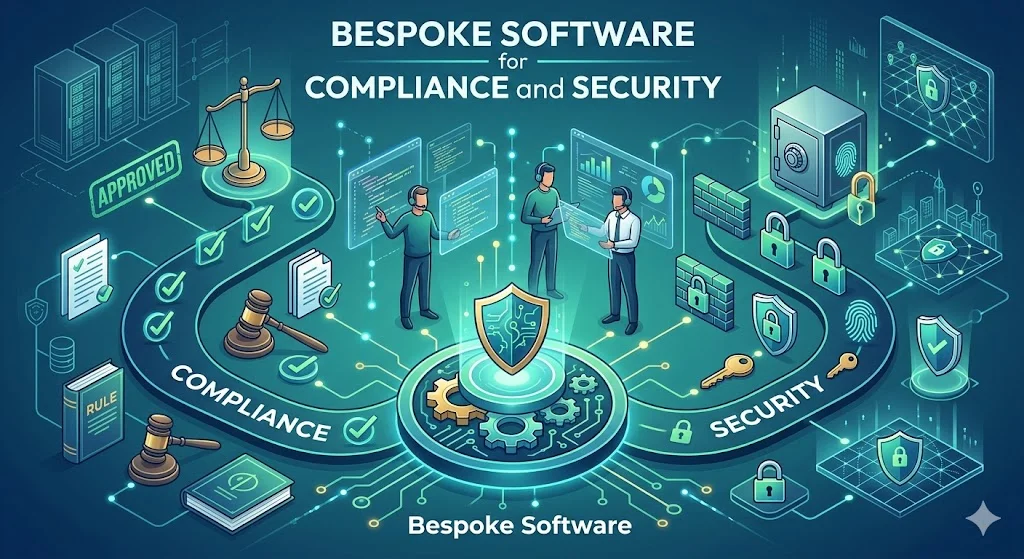
bespoke software compliance refers to custom-developed software systems specifically designed to help organisations meet industry regulations, security standards, and internal governance requirements. Unlike generic software platforms, bespoke applications can be tailored to specific compliance frameworks, reporting obligations, and operational processes.
Many organisations still rely on spreadsheets, paper-based procedures, and disconnected systems to manage compliance activities. These manual processes increase the likelihood of human error, missed deadlines, and security vulnerabilities. Businesses can significantly improve efficiency by replacing outdated workflows with purpose-built digital solutions.
Businesses looking to modernise operations often begin by reviewing opportunities for replacing manual processes with software. Automating repetitive tasks not only improves productivity but also creates more accurate compliance records and stronger audit trails.
- Improved regulatory compliance management
- Centralised documentation and reporting
- Enhanced visibility across business operations
- Reduced risk of human error
- Stronger protection of sensitive information
- Better support for future business growth
As regulatory requirements become more complex, organisations increasingly adopt data security software and compliance automation solutions to maintain accuracy, consistency, and accountability across all business functions.
2. Security Advantages of Custom Software
One of the biggest benefits of investing in bespoke software compliance solutions is the enhanced level of security they provide. Businesses today handle vast amounts of sensitive information, including customer records, financial data, employee details, and confidential operational documents. Generic software platforms often contain unnecessary features and broader attack surfaces, while custom-built solutions are designed specifically around an organisation’s security requirements.
Unlike off-the-shelf applications that serve thousands of businesses with identical architecture, bespoke systems can be developed with security controls tailored to a company’s industry, compliance obligations, and internal risk management policies. This allows organisations to implement stronger safeguards while maintaining operational efficiency.
Reduced Security Vulnerabilities
Mass-market software products are common targets for cybercriminals because their vulnerabilities can affect a large number of users. Custom-built applications offer a smaller attack surface because they are uniquely designed and configured for the organisation using them.
- Custom authentication and access controls
- Role-based user permissions
- Secure data storage architecture
- Tailored security configurations
- Reduced exposure to common exploits
Enhanced Data Protection
Modern organisations must protect sensitive information while complying with industry regulations and privacy requirements. Effective data security software helps prevent unauthorised access, data breaches, and accidental information disclosure.
With bespoke systems, businesses can implement advanced security measures such as:
- Data encryption at rest and in transit
- Multi-factor authentication (MFA)
- Secure API integrations
- Automated backup procedures
- Continuous monitoring and activity logging
- Real-time threat detection capabilities
Improved Audit Trails and Compliance Tracking
Compliance requirements often demand accurate records of system activity, user actions, and operational changes. Bespoke applications can automatically generate detailed audit logs that simplify reporting and regulatory reviews.
This level of visibility supports compliance automation initiatives by ensuring that critical information is recorded consistently without relying on manual processes. Automated tracking also helps organisations identify unusual activity quickly and respond before security incidents escalate.
Better Control Over User Access
Not every employee requires access to every system or dataset. Bespoke software allows organisations to establish precise permission structures that align with business responsibilities and compliance requirements.
- Department-specific access controls
- Manager approval workflows
- Temporary access permissions
- Secure remote access management
- Detailed user activity reporting
These capabilities help reduce insider threats while ensuring that employees can access only the information necessary to perform their roles.
Supporting Long-Term Business Security
As businesses grow, security requirements become increasingly complex. Organisations investing in custom technology often discover that secure software infrastructure directly supports operational growth and scalability.
Businesses planning for expansion can benefit from strategies outlined in Custom Software for Business Growth, where scalable software solutions help organisations maintain security standards while supporting increased workloads and evolving compliance requirements.
Ultimately, bespoke software compliance delivers more than regulatory support. It provides a secure foundation that protects critical business assets, strengthens customer trust, improves operational resilience, and helps organisations remain competitive in an increasingly digital environment.
3. Compliance Automation Benefits
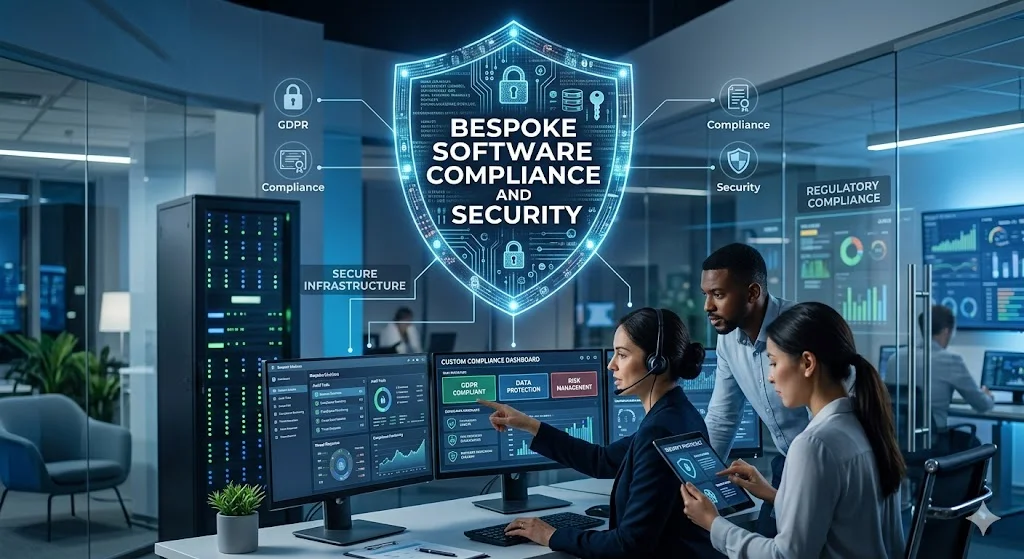
As regulations become more demanding across industries, businesses are increasingly turning to compliance automation to simplify regulatory management and reduce administrative burdens. Manual compliance processes often involve spreadsheets, paperwork, repetitive data entry, and time-consuming reviews that can increase the risk of human error. By implementing bespoke software compliance solutions, organisations can automate critical compliance activities while improving accuracy and efficiency.
Automation helps businesses maintain consistent processes, improve reporting capabilities, and ensure that regulatory obligations are met on time. Rather than relying on employees to manually track deadlines and documentation, software can continuously monitor compliance requirements and trigger alerts when action is required.
Reducing Human Error
Human error remains one of the leading causes of compliance failures. Missing documentation, incorrect data entry, or overlooked deadlines can result in operational disruptions and regulatory issues.
Custom-built compliance systems minimise these risks by automating routine tasks and standardising workflows.
- Automatic data validation
- Consistent record keeping
- Automated reminders and notifications
- Standardised approval processes
- Reduced reliance on manual tracking
Faster Regulatory Reporting
Generating reports manually can consume significant time and resources. Bespoke systems centralise information and automatically compile compliance-related data into structured reports.
This allows organisations to:
- Generate reports instantly
- Access real-time compliance information
- Improve audit preparation
- Maintain accurate documentation
- Respond quickly to regulatory requests
By leveraging compliance automation, businesses can significantly reduce administrative overhead while improving confidence in the accuracy of compliance reporting.
Streamlining Business Processes
Many organisations still depend on fragmented systems and manual workflows that create inefficiencies throughout operations. Replacing these outdated processes with integrated software solutions improves both compliance performance and overall productivity.
Businesses looking to modernise operations can explore the benefits of replacing manual processes with software. Digital workflows help ensure consistency while reducing delays and administrative bottlenecks.
- Automated document management
- Electronic approval workflows
- Integrated compliance monitoring
- Centralised data management
- Improved operational visibility
Real-Time Compliance Monitoring
One of the most valuable advantages of modern data security software and compliance platforms is the ability to monitor activities in real time. Instead of discovering problems during audits, organisations can identify issues immediately and take corrective action before they become significant risks.
Real-time monitoring can provide:
- Instant compliance alerts
- Automated policy enforcement
- Continuous activity tracking
- Risk identification and reporting
- Enhanced transparency across departments
Supporting Sustainable Business Growth
As organisations expand, compliance requirements become more complex. Additional employees, customers, transactions, and operational processes create greater administrative demands. Automated compliance systems help businesses scale without dramatically increasing manual workloads.
Companies investing in bespoke software compliance solutions often find that automation supports both regulatory requirements and long-term growth objectives. Scalable software infrastructure enables businesses to adapt quickly to changing regulations while maintaining security and operational efficiency.
When combined with robust data security software, compliance automation creates a proactive approach to governance, risk management, and regulatory adherence. This not only protects the organisation but also strengthens customer confidence and supports sustainable business success.
4. Supporting Business Growth Securely
Business growth creates new opportunities, but it also introduces additional security, compliance, and operational challenges. As organisations expand, they manage larger volumes of data, serve more customers, and operate across increasingly complex environments. Without the right technology infrastructure, maintaining regulatory compliance and protecting sensitive information can become difficult. This is where bespoke software compliance solutions provide significant value.
Unlike generic platforms that often require businesses to adapt their processes to fit predefined functionality, custom-built software evolves alongside organisational needs. This flexibility allows companies to maintain strong security controls and compliance standards while supporting sustainable growth.
Scalable Security Infrastructure
As businesses grow, cyber risks and data management requirements increase. Systems that work effectively for a small organisation may struggle to support larger workloads, additional users, and expanding operational demands.
Custom software provides scalable infrastructure that can accommodate growth without compromising security.
- Support for increasing user volumes
- Scalable database architecture
- Advanced access management controls
- Flexible integration capabilities
- Improved system performance as operations expand
By implementing scalable data security software, organisations can maintain consistent protection standards even as their business operations become more complex.
Improved Operational Efficiency
Growth often exposes inefficiencies hidden within manual processes and disconnected systems. As transaction volumes increase, manual administration becomes more difficult to manage, leading to delays, compliance risks, and increased operational costs.
Businesses that invest in automation and custom software can streamline workflows, improve productivity, and reduce administrative burdens while maintaining regulatory compliance.
- Automated workflows
- Reduced manual data entry
- Centralised business information
- Faster decision-making processes
- Improved collaboration between departments
Adapting to Changing Regulatory Requirements
Regulatory frameworks evolve constantly. Organisations must remain agile to ensure compliance with new requirements, industry standards, and security obligations. Off-the-shelf software may not always adapt quickly enough to changing regulations, creating potential compliance gaps.
Custom-built compliance systems can be modified and updated as regulations change, allowing organisations to remain compliant without replacing entire software platforms.
- Flexible compliance configurations
- Custom reporting capabilities
- Automated policy updates
- Industry-specific compliance support
- Long-term regulatory adaptability
Supporting Long-Term Business Expansion
Successful growth requires technology that can support evolving business objectives. Many organisations choose custom development because it provides a foundation that aligns directly with strategic goals while maintaining strong governance and security controls.
Businesses interested in scaling efficiently can explore insights from Custom Software Business Growth, which explains how tailored technology solutions help organisations improve performance while supporting future expansion.
Through intelligent automation, enhanced security controls, and flexible infrastructure, bespoke software compliance solutions help businesses grow confidently while maintaining operational integrity and regulatory compliance.
Building Customer Trust Through Security
Customers increasingly expect businesses to protect their personal information and maintain high security standards. Strong compliance practices supported by reliable data security software demonstrate a commitment to privacy, transparency, and responsible data management.
By investing in secure custom software, organisations not only meet regulatory requirements but also strengthen customer confidence, improve brand reputation, and create a competitive advantage in the marketplace.
5. The Role of Ongoing IT Support
Implementing a secure compliance platform is only the beginning. To maximise the value of bespoke software compliance, businesses need ongoing technical support, regular system monitoring, security updates, and continuous optimisation. Without proactive maintenance, even the most advanced software can become vulnerable to emerging threats and changing regulatory requirements.
Ongoing IT support ensures that software remains secure, reliable, and aligned with business objectives. As organisations grow and regulations evolve, continuous technical assistance helps maintain compliance while minimising operational disruptions.
Maintaining Security Standards
Cybersecurity threats continue to evolve rapidly. New vulnerabilities emerge regularly, making proactive monitoring and system updates essential. Businesses that neglect software maintenance may expose themselves to unnecessary security risks.
Professional IT support teams help organisations maintain strong protection through:
- Regular security updates and patch management
- Continuous system monitoring
- Threat detection and incident response
- Performance optimisation
- Backup and disaster recovery management
Combining ongoing support with robust data security software significantly reduces the likelihood of security breaches and operational downtime.
Supporting Compliance Requirements
Compliance obligations rarely remain static. Regulatory bodies frequently update standards, reporting requirements, and security expectations. Businesses must be prepared to adapt quickly to remain compliant.
Ongoing IT support helps organisations:
- Implement compliance-related software updates
- Modify workflows to meet new regulations
- Maintain accurate reporting systems
- Improve audit readiness
- Reduce compliance risks over time
This proactive approach strengthens compliance automation efforts and helps businesses avoid costly compliance failures.
Minimising Operational Disruptions
Unexpected software issues can affect productivity, customer service, and compliance performance. Ongoing technical support ensures that potential problems are identified and resolved before they impact daily operations.
- Faster issue resolution
- Reduced system downtime
- Improved software reliability
- Better user experience
- Enhanced business continuity
Helping Businesses Stay Competitive
Technology plays a critical role in modern business success. Organisations that continuously improve their systems can respond faster to market changes, customer expectations, and regulatory developments.
Businesses seeking long-term technology advantages can learn more about How IT Support Benefits Elevate Melbourne Businesses, which highlights the importance of ongoing technical expertise in maintaining operational efficiency and security.
By combining expert support with bespoke software compliance solutions, organisations gain a stable foundation for growth, stronger security controls, improved regulatory performance, and greater confidence in their technology infrastructure.
6. Bespoke vs Off-the-Shelf Software
Choosing between bespoke software and off-the-shelf solutions is a critical decision for businesses seeking stronger compliance and security capabilities. While packaged software may offer a lower initial investment, it often lacks the flexibility, security controls, and scalability required by growing organisations.
For organisations prioritising security, operational efficiency, and regulatory compliance, bespoke software compliance solutions often provide greater long-term value than generic alternatives. The ability to integrate advanced data security software, automate compliance processes, and adapt to changing business requirements makes custom software a strategic investment for future growth.
7. Frequently Asked Questions
What is bespoke software compliance?
Bespoke software compliance refers to custom-developed software solutions specifically designed to help businesses meet regulatory requirements, strengthen security controls, and automate compliance-related processes. These systems are built around the organisation’s unique operational and compliance needs rather than relying on generic functionality.
Why is bespoke software more secure than off-the-shelf software?
Custom software can be developed with tailored security controls, role-based access permissions, advanced encryption, and industry-specific compliance requirements. Because the system is designed specifically for the organisation, it often presents fewer security vulnerabilities than widely used commercial software platforms.
How does compliance automation benefit businesses?
Compliance automation reduces manual workloads, improves reporting accuracy, minimises human error, and helps organisations maintain consistent regulatory compliance. Automated workflows also improve audit readiness and allow businesses to respond more efficiently to changing regulations.
Can bespoke software support business growth?
Yes. Bespoke software is designed to scale alongside business operations. As organisations grow, custom systems can be expanded to support additional users, departments, compliance requirements, and operational processes without compromising performance or security.
What role does data security software play in compliance?
Data security software helps protect sensitive business and customer information through encryption, access controls, monitoring, and threat detection. Strong security measures are often essential for meeting regulatory requirements and maintaining customer trust.
Is bespoke software suitable for small and medium-sized businesses?
Absolutely. While large enterprises frequently invest in custom software, small and medium-sized businesses can also benefit from tailored solutions that improve efficiency, reduce administrative costs, and strengthen compliance management as the organisation grows.
How often should compliance systems be updated?
Compliance systems should be reviewed regularly to ensure they remain aligned with evolving regulations, security standards, and operational requirements. Ongoing maintenance and professional IT support help keep systems secure and effective.
Strengthen Security and Compliance with Bespoke Software
Future-proof your organisation with secure bespoke software compliance solutions designed to automate workflows, protect sensitive data, and support regulatory requirements. Improve operational efficiency while maintaining the highest standards of security and compliance.
Discover how customised technology can help your business achieve stronger governance, enhanced data security software capabilities, and more effective compliance automation processes.