
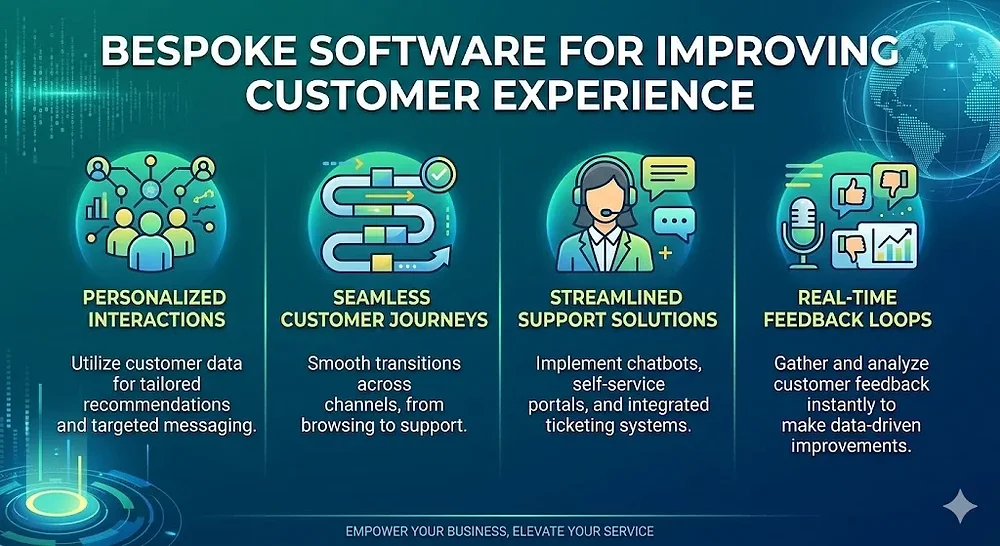
Customer expectations have evolved dramatically in recent years. Today’s customers expect fast responses, personalised interactions, seamless communication, and consistent experiences across every touchpoint. Businesses that fail to meet these expectations risk losing customers to competitors that offer more convenient and engaging experiences. This is why investing in bespoke software customer experience solutions has become a strategic priority for organisations seeking sustainable growth and stronger customer relationships.
While many businesses rely on off-the-shelf customer relationship management platforms and generic customer service tools, these systems often struggle to support unique customer journeys and business-specific requirements. Every organisation serves customers differently, and delivering exceptional experiences frequently requires technology that aligns precisely with internal processes, service models, and customer expectations.
Custom-built software enables businesses to create personalised customer journeys, automate customer interactions, and provide a seamless experience from the first point of contact through long-term customer retention. Through intelligent cx automation, organisations can improve responsiveness, eliminate friction, and create more meaningful customer engagements.
At Devectus, organisations implement advanced software solutions designed to optimise customer experiences, streamline communication workflows, and create scalable digital environments that support long-term customer satisfaction and loyalty.
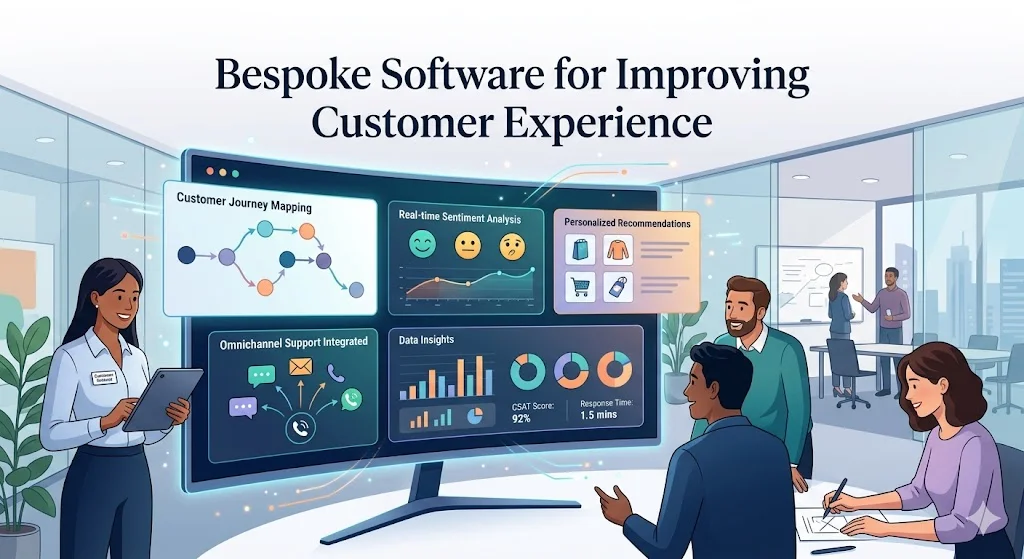
Complete Guide Navigation
- 1. Understanding Bespoke Software for Customer Experience
- 2. Why Customer Experience Matters for Modern Businesses
- 3. How CX Automation Improves Customer Satisfaction
- 4. Personalising the Customer Journey with Custom Software
- 5. Integrating Customer Journey Software Across Departments
- 6. Measuring Customer Experience Improvements
- 7. Custom Software vs Generic CX Platforms
- 8. Frequently Asked Questions
1. Understanding Bespoke Software for Customer Experience
Bespoke software customer experience solutions are custom-built platforms specifically designed to improve the way businesses interact with customers throughout every stage of the customer journey. Unlike generic customer service applications that offer the same features to every organisation, bespoke software is developed around the unique needs of a particular business, ensuring that customer interactions are efficient, personalised, and aligned with organisational objectives.
Customer experience is no longer limited to customer service departments. Every interaction a customer has with a business contributes to their overall perception of the brand. This includes website visits, enquiry forms, sales conversations, onboarding processes, support requests, account management, and post-purchase engagement.
When these interactions are disconnected or inconsistent, customers often experience frustration. They may need to repeat information multiple times, wait for responses, or navigate complicated processes. Bespoke software addresses these challenges by creating a unified environment where customer information, communication channels, and business workflows work together seamlessly.
The Evolution of Customer Experience Technology
Historically, businesses managed customer interactions using separate systems for sales, marketing, support, and operations. While these tools often solved individual problems, they created fragmented customer experiences because information was stored across multiple platforms.
Modern organisations are increasingly adopting integrated customer journey software solutions that centralise customer information and automate interactions across departments. This allows businesses to deliver consistent experiences regardless of how or where customers engage with the organisation.
With bespoke software, organisations can design customer journeys that reflect their unique service model rather than forcing customers into rigid workflows defined by generic software vendors.
Key Features of Bespoke Customer Experience Software
Every implementation is different, but most bespoke software customer experience platforms include a combination of advanced features designed to improve engagement and operational efficiency.
- Centralised customer profiles
- Automated communication workflows
- Real-time customer activity tracking
- Multi-channel communication management
- Customer self-service portals
- Personalised content delivery
- Custom reporting dashboards
- Integrated support and ticketing systems
These capabilities enable businesses to provide a more personalised and responsive customer experience while reducing manual administration and operational inefficiencies.
Creating Seamless Customer Journeys
One of the most important advantages of bespoke software is the ability to create seamless customer journeys. Customers rarely interact with a business through a single channel. They may visit a website, submit an enquiry form, speak with sales representatives, receive onboarding assistance, contact support teams, and engage with marketing campaigns throughout their lifecycle.
Without integrated systems, these interactions often feel disconnected. Customers may receive inconsistent information or experience delays as departments manually transfer information between systems.
Through intelligent cx automation, bespoke software can connect every stage of the customer journey into a unified process.
- Automatic lead capture and qualification
- Personalised onboarding workflows
- Proactive customer communications
- Automated support case management
- Customer retention campaigns
- Feedback collection and analysis
This creates a smoother experience that reduces friction while increasing customer satisfaction and engagement.
Supporting Business-Specific Requirements
Every industry has different customer expectations and operational requirements. A healthcare provider manages patient communications differently from a financial services company. Similarly, a logistics organisation requires different workflows compared to an educational institution.
Generic customer experience platforms often struggle to accommodate these specialised requirements. Businesses are frequently forced to modify internal processes to fit software limitations.
With custom software development, organisations gain the flexibility to design systems that align with their exact customer journey requirements. This ensures that technology supports the business rather than forcing the business to adapt to technology constraints.
Many organisations implementing custom software development solutions discover significant improvements in customer satisfaction, operational efficiency, and employee productivity because workflows are built around actual business needs.
Enhancing Personalisation at Scale
Modern customers increasingly expect personalised experiences. They want businesses to understand their preferences, history, and requirements without repeatedly providing the same information.
Bespoke software makes this possible by consolidating customer data from multiple touchpoints into a single profile. Employees gain immediate access to relevant customer information, allowing them to provide faster and more personalised service.
- Customer preference tracking
- Purchase history visibility
- Behavioural analytics
- Personalised recommendations
- Targeted communication strategies
- Automated customer segmentation
This level of personalisation helps organisations strengthen customer relationships while increasing loyalty and long-term retention.
Building a Foundation for Future Growth
Customer expectations continue to evolve, and businesses must adapt accordingly. One of the greatest advantages of investing in bespoke software customer experience solutions is flexibility. Unlike off-the-shelf platforms that depend on vendor roadmaps, bespoke systems can evolve alongside changing business requirements and customer needs.
Whether introducing new products, expanding into new markets, or implementing additional service channels, organisations can continuously enhance their customer experience platform without replacing existing infrastructure.
Businesses that invest in professional custom software development gain a scalable technology foundation that supports ongoing innovation, stronger customer relationships, and long-term competitive advantage. As customer expectations continue to rise, bespoke customer experience software provides the flexibility and control necessary to deliver exceptional experiences at every stage of the customer journey.
2. Why Customer Experience Matters for Modern Businesses
Customer experience has become one of the most important competitive differentiators in today’s business environment. While product quality, pricing, and marketing remain important, many customers now make purchasing decisions based on how easy, convenient, and enjoyable it is to interact with a company. Businesses that consistently deliver positive experiences often achieve higher customer retention rates, stronger brand loyalty, and greater long-term profitability.
As digital transformation continues to reshape customer expectations, organisations are increasingly investing in bespoke software customer experience solutions to create seamless interactions across every stage of the customer journey. Rather than relying on disconnected systems and manual processes, businesses are using technology to build customer-centric experiences that improve satisfaction and strengthen relationships.
The Shift Towards Experience-Driven Competition
Historically, businesses competed primarily on price, product features, or geographic reach. Today, customer expectations have changed significantly. Consumers and business clients alike expect fast responses, personalised interactions, self-service options, and consistent communication regardless of the channel they use.
When businesses fail to meet these expectations, customers often explore alternative providers that offer a more convenient experience. As a result, customer experience has become a major factor influencing purchasing decisions and brand perception.
This shift has encouraged organisations to adopt advanced customer journey software that helps them understand customer behaviour, automate interactions, and create more personalised experiences.
Customer Experience Impacts Revenue Growth
A positive customer experience does more than improve satisfaction—it directly influences business performance. Customers who enjoy smooth and efficient interactions are more likely to make repeat purchases, spend more over time, and recommend the business to others.
Conversely, poor experiences can result in lost sales, negative reviews, and customer churn. Even a single frustrating interaction can damage customer trust and reduce the likelihood of future engagement.
Businesses implementing bespoke software customer experience platforms often see improvements in:
- Customer retention rates
- Repeat purchase frequency
- Customer lifetime value
- Referral and word-of-mouth marketing
- Brand reputation and trust
- Sales conversion rates
By creating frictionless experiences, organisations can increase revenue while reducing the costs associated with acquiring new customers.
The Cost of Poor Customer Experiences
Many organisations underestimate the financial impact of inefficient customer journeys. Delayed responses, repetitive data collection, inconsistent communication, and complicated support processes can quickly frustrate customers.
These issues often stem from fragmented systems that prevent employees from accessing complete customer information. When departments operate in isolation, customers may need to repeat details multiple times as they move between teams.
Common consequences of poor customer experiences include:
- Higher customer churn rates
- Reduced customer loyalty
- Negative online reviews
- Lower employee productivity
- Increased support costs
- Lost revenue opportunities
Modern cx automation solutions help eliminate these challenges by connecting systems, streamlining communication, and ensuring consistent service delivery across all touchpoints.
Customer Expectations Continue to Increase
Technology leaders such as e-commerce platforms, streaming services, and digital-first businesses have fundamentally changed customer expectations. Customers now expect immediate access to information, personalised recommendations, and rapid support responses.
These expectations extend across nearly every industry, including healthcare, finance, education, logistics, professional services, and manufacturing.
Today’s customers often expect:
- Instant access to information
- Personalised communication
- Self-service capabilities
- Mobile-friendly experiences
- Fast support resolution
- Consistent omnichannel interactions
Meeting these expectations requires more than simply hiring additional staff. Businesses need scalable technology solutions capable of delivering personalised experiences efficiently and consistently.
Personalisation Drives Customer Engagement
Personalisation has become one of the most influential factors in customer experience management. Customers prefer interacting with businesses that understand their preferences, recognise previous interactions, and provide relevant recommendations.
Generic communication strategies often fail because they treat every customer the same. Bespoke software enables organisations to tailor interactions based on customer history, behaviour, preferences, and engagement patterns.
Examples of personalisation include:
- Customised product recommendations
- Personalised email campaigns
- Dynamic website content
- Tailored onboarding experiences
- Individualised support interactions
- Behaviour-driven communication workflows
Through intelligent cx automation, businesses can deliver personalised experiences at scale without increasing administrative workload.
Improving Customer Trust and Loyalty
Trust is one of the most valuable assets any organisation can build. Customers who trust a business are more likely to remain loyal, purchase additional products or services, and recommend the company to others.
Consistent customer experiences play a critical role in building this trust. When customers receive reliable communication, accurate information, and efficient service, confidence in the organisation grows over time.
Bespoke software helps strengthen trust by:
- Providing consistent service delivery
- Reducing communication errors
- Improving transparency
- Ensuring faster response times
- Supporting proactive customer engagement
- Delivering reliable information across channels
These improvements create stronger customer relationships that contribute to long-term business success.
Supporting Omnichannel Customer Experiences
Modern customers interact with businesses through multiple channels, including websites, email, social media, live chat, phone calls, mobile applications, and customer portals. They expect these channels to work together seamlessly.
Without integrated systems, customers often encounter inconsistent information and disconnected interactions. This can create confusion and reduce satisfaction.
Through bespoke software customer experience solutions, organisations can centralise customer information and create unified omnichannel experiences.
- Unified customer profiles
- Cross-channel communication history
- Integrated support interactions
- Consistent messaging
- Real-time customer data synchronisation
- Seamless transitions between channels
This ensures that customers receive the same high-quality experience regardless of how they choose to engage with the business.
Technology as a Customer Experience Enabler
Customer experience improvement is no longer solely the responsibility of customer service teams. It requires collaboration between operations, sales, marketing, support, and technology departments.
Investing in custom software development enables organisations to build technology platforms specifically designed around customer needs. Rather than adapting customer journeys to fit generic software limitations, businesses can create systems that support ideal customer experiences from end to end.
Organisations that prioritise customer experience often outperform competitors because they create stronger relationships, improve retention, and generate more sustainable growth. Through strategic investment in bespoke software customer experience solutions, businesses gain the tools needed to exceed customer expectations, strengthen loyalty, and build lasting competitive advantages in increasingly crowded markets.
3. How CX Automation Improves Customer Satisfaction
As customer expectations continue to rise, businesses are under increasing pressure to deliver faster responses, more personalised interactions, and seamless service experiences. However, achieving these goals through manual processes alone is becoming increasingly difficult. Employees often spend significant time handling repetitive tasks, updating records, responding to common enquiries, and coordinating information between departments.
This is where cx automation becomes a powerful tool for improving customer satisfaction. By automating routine interactions and streamlining customer-facing processes, organisations can provide faster, more consistent, and more personalised experiences while reducing operational complexity.
When integrated into a bespoke software customer experience platform, automation does far more than save time. It enables businesses to create proactive, customer-centric experiences that improve engagement and strengthen long-term relationships.
What is CX Automation?
Customer Experience Automation, commonly referred to as cx automation, involves using technology to automate customer interactions, communication workflows, service processes, and engagement activities throughout the customer lifecycle.
Rather than relying entirely on manual intervention, automation ensures that customer actions trigger predefined workflows designed to deliver timely responses, relevant information, and consistent service.
Examples of customer experience automation include:
- Automated enquiry responses
- Customer onboarding workflows
- Appointment confirmations and reminders
- Support ticket routing
- Customer satisfaction surveys
- Personalised email campaigns
- Order status notifications
- Customer retention programs
By automating these interactions, businesses can provide a more efficient and predictable experience while allowing employees to focus on higher-value activities.
Delivering Faster Response Times
One of the most common sources of customer frustration is delayed communication. Customers increasingly expect immediate responses when submitting enquiries, requesting support, or interacting with a business online.
Manual processes often struggle to meet these expectations, particularly during busy periods or outside standard business hours.
Through intelligent cx automation, businesses can respond instantly to customer actions.
- Immediate enquiry acknowledgements
- Automated appointment confirmations
- Real-time support ticket creation
- Instant order notifications
- Automatic follow-up communications
These automated responses reassure customers that their request has been received and is being processed, improving confidence and reducing uncertainty.
Creating Consistent Customer Experiences
Consistency plays a critical role in customer satisfaction. Customers expect the same level of service regardless of which employee they speak with, which department they contact, or which communication channel they use.
Manual processes often introduce variability because individual employees may handle situations differently. This can result in inconsistent messaging, service quality, and customer outcomes.
A bespoke software customer experience platform standardises workflows and ensures that predefined business rules are applied consistently across all interactions.
- Standardised communication templates
- Consistent onboarding procedures
- Automated escalation processes
- Uniform service delivery standards
- Consistent customer follow-up schedules
This consistency improves customer trust and strengthens brand perception over time.
Reducing Customer Effort
Customers generally prefer experiences that require minimal effort. The easier it is to interact with a business, the more satisfied customers tend to be.
Unfortunately, many organisations unintentionally create friction through manual processes that require customers to repeat information, complete unnecessary steps, or wait for approvals and responses.
Automation helps eliminate these obstacles by simplifying customer interactions.
- Automatic data population
- Self-service account management
- Digital document submission
- Automated workflow approvals
- Integrated communication channels
Reducing customer effort often leads directly to improved satisfaction, stronger loyalty, and higher retention rates.
Personalising Interactions at Scale
Personalisation is one of the most important factors influencing modern customer experiences. Customers expect businesses to understand their history, preferences, and needs without repeatedly providing the same information.
Delivering this level of personalisation manually becomes increasingly difficult as customer volumes grow.
Through integrated customer journey software, businesses can automate personalised interactions based on customer behaviour and profile data.
- Personalised product recommendations
- Behaviour-triggered communications
- Targeted promotional offers
- Custom onboarding experiences
- Individualised support interactions
- Dynamic content delivery
This allows organisations to maintain highly personalised experiences even when serving thousands of customers simultaneously.
Improving Customer Onboarding Experiences
The onboarding phase often determines a customer’s long-term perception of a business. A smooth onboarding experience helps customers understand products, achieve early success, and develop confidence in their purchasing decision.
Manual onboarding processes frequently result in delays, inconsistent communication, and unnecessary complexity.
Using cx automation, organisations can create structured onboarding workflows that guide customers through every stage of implementation and adoption.
- Welcome communications
- Step-by-step onboarding sequences
- Training resource delivery
- Progress tracking
- Automated milestone notifications
- Customer success check-ins
These automated processes improve engagement while helping customers achieve value more quickly.
Enhancing Customer Support Operations
Support interactions significantly influence overall customer satisfaction. Customers expect support requests to be resolved quickly and accurately, regardless of complexity.
A well-designed bespoke software customer experience platform can automate many support processes while ensuring that more complex issues receive appropriate attention.
- Automatic ticket creation
- Intelligent ticket routing
- Priority-based case management
- Automated status updates
- Knowledge base recommendations
- Customer feedback collection
These capabilities improve support efficiency while reducing response and resolution times.
Enabling Proactive Customer Engagement
Many businesses only communicate with customers when a problem occurs or when customers initiate contact. However, proactive engagement often creates significantly better experiences.
Automation allows organisations to anticipate customer needs and communicate before issues arise.
Examples include:
- Renewal reminders
- Maintenance notifications
- Product usage recommendations
- Service updates
- Customer success outreach
- Feedback requests
Proactive communication demonstrates commitment to customer success and helps strengthen long-term relationships.
Using Data to Continuously Improve Experiences
One of the greatest advantages of automation is the ability to collect and analyse customer interaction data. Every automated workflow generates valuable insights that can be used to improve future experiences.
Modern customer journey software provides detailed visibility into customer behaviour, engagement patterns, and operational performance.
- Response time analysis
- Customer satisfaction metrics
- Journey completion rates
- Support resolution statistics
- Customer retention trends
- Engagement performance data
These insights enable organisations to identify bottlenecks, optimise workflows, and continuously refine customer experiences.
Scaling Customer Experience Without Increasing Complexity
As businesses grow, customer volumes naturally increase. Without automation, maintaining service quality often requires hiring additional staff and expanding operational resources.
Automation provides a scalable alternative. Organisations can manage larger customer bases while maintaining responsiveness, consistency, and personalisation.
Businesses investing in custom software development often discover that automation allows them to improve customer satisfaction while controlling operational costs and supporting sustainable growth.
By combining intelligent workflows, personalised communication, and real-time data insights, cx automation enables organisations to deliver exceptional customer experiences at scale. Through strategic investment in bespoke software customer experience solutions, businesses can improve responsiveness, reduce customer effort, strengthen loyalty, and create long-term competitive advantages that drive ongoing success.
4. Personalising the Customer Journey with Custom Software
Modern customers expect far more than generic products and services. They want businesses to understand their needs, recognise their preferences, and provide relevant experiences throughout every interaction. Whether engaging through a website, speaking with a sales representative, contacting support, or using a customer portal, individuals increasingly expect experiences tailored specifically to them.
This growing demand for personalisation has made bespoke software customer experience solutions a valuable investment for organisations seeking to strengthen customer relationships and improve long-term retention. By leveraging advanced automation, data integration, and intelligent workflows, businesses can create highly personalised customer journeys that improve satisfaction and increase engagement.
Unlike standard software platforms that provide limited personalisation capabilities, custom-built systems allow organisations to design customer experiences that align precisely with their products, services, processes, and customer expectations.
Understanding the Customer Journey
The customer journey encompasses every interaction a customer has with a business, from initial awareness through ongoing engagement and loyalty. Each stage of this journey influences how customers perceive the organisation and whether they choose to continue the relationship.
Typical stages of a customer journey include:
- Brand awareness
- Research and consideration
- Initial enquiry
- Sales engagement
- Purchase decision
- Customer onboarding
- Product or service usage
- Customer support interactions
- Renewal or repeat purchase
- Long-term loyalty and advocacy
When businesses fail to connect these stages effectively, customers often experience inconsistency, frustration, and communication gaps. Custom software helps create a unified journey that feels seamless and personalised from beginning to end.
Why Personalisation Matters
Customers are exposed to thousands of marketing messages and business interactions every day. Generic communications are increasingly ignored because they fail to address individual needs and preferences.
Personalised experiences stand out because they demonstrate that a business understands its customers and values their time.
Research consistently shows that personalised interactions can lead to:
- Higher customer satisfaction
- Improved engagement rates
- Increased customer loyalty
- Stronger brand trust
- Higher conversion rates
- Greater customer lifetime value
By implementing bespoke software customer experience platforms, organisations can personalise interactions at scale while maintaining operational efficiency.
Building Unified Customer Profiles
Effective personalisation begins with accurate customer data. Many businesses store information across multiple systems, making it difficult to gain a complete understanding of each customer.
A customer may interact with sales teams, support staff, marketing campaigns, websites, and mobile applications, generating valuable information at every touchpoint. Without integration, this information remains fragmented and difficult to use effectively.
Custom-built customer journey software centralises customer information into a single unified profile.
- Contact information
- Purchase history
- Communication preferences
- Support interactions
- Website activity
- Marketing engagement data
- Customer feedback records
- Service usage history
This comprehensive view enables employees and automated systems to provide more relevant and personalised interactions.
Personalising Customer Communications
Communication is one of the most visible components of customer experience. Customers appreciate messages that are relevant, timely, and tailored to their specific circumstances.
Generic mass communications often produce low engagement because they fail to address individual needs. Custom software enables businesses to create highly targeted communication strategies.
Through intelligent cx automation, organisations can personalise:
- Email campaigns
- SMS notifications
- Customer portal content
- Product recommendations
- Promotional offers
- Service updates
- Customer support communications
- Renewal reminders
These personalised communications improve relevance while helping customers feel valued and understood.
Creating Dynamic Customer Experiences
Traditional customer experiences often follow static workflows that treat every customer identically. Modern businesses increasingly recognise that different customers have different needs, behaviours, and expectations.
Custom software allows organisations to create dynamic customer journeys that adapt based on individual circumstances.
Examples include:
- Custom onboarding paths
- Behaviour-driven workflows
- Role-specific user experiences
- Industry-specific content delivery
- Personalised service recommendations
- Adaptive support processes
These dynamic experiences ensure that customers receive information and assistance that is most relevant to their situation.
Using Behavioural Data to Improve Engagement
Customer behaviour provides valuable insights into preferences, interests, and future needs. Every interaction generates data that can be used to improve personalisation efforts.
Modern customer journey software can track and analyse customer behaviour across multiple channels, providing organisations with a deeper understanding of engagement patterns.
- Website browsing activity
- Product usage trends
- Purchase behaviour
- Email engagement rates
- Support interaction history
- Customer feedback patterns
These insights allow businesses to anticipate customer needs and deliver more relevant experiences proactively.
Enhancing Customer Onboarding Through Personalisation
The onboarding process represents one of the most important stages of the customer journey. First impressions often influence long-term satisfaction, retention, and overall customer success.
Generic onboarding processes may overwhelm customers with unnecessary information or fail to address their specific goals.
Using bespoke software customer experience solutions, organisations can create personalised onboarding journeys that align with individual customer requirements.
- Custom onboarding checklists
- Role-based training resources
- Personalised implementation plans
- Progress tracking dashboards
- Automated milestone communications
- Customer success monitoring
These personalised experiences help customers achieve value more quickly while reducing frustration and confusion.
Supporting Long-Term Customer Relationships
Personalisation should not end after the initial sale. Successful organisations continuously engage customers throughout the entire relationship lifecycle.
Custom software enables businesses to maintain meaningful engagement by automatically identifying opportunities for additional support, education, and communication.
- Customer health monitoring
- Renewal management
- Upsell and cross-sell recommendations
- Loyalty program integration
- Feedback collection workflows
- Customer success initiatives
By maintaining ongoing engagement, organisations can strengthen customer loyalty and increase lifetime value.
Balancing Automation with Human Interaction
While automation plays a crucial role in personalisation, customers still value meaningful human interactions. The goal is not to replace employees but to empower them with better information and more efficient processes.
Through intelligent cx automation, routine tasks can be automated while employees focus on high-value conversations that require empathy, expertise, and problem-solving skills.
This balance creates experiences that feel both efficient and personal, allowing organisations to scale operations without sacrificing customer satisfaction.
Creating Competitive Advantage Through Personalisation
As markets become increasingly competitive, customer experience often becomes the deciding factor between similar products and services. Businesses that deliver personalised experiences consistently outperform competitors that rely on generic interactions.
Investing in custom software development allows organisations to build customer experience platforms tailored specifically to their audience, business model, and strategic goals.
By leveraging advanced data insights, intelligent workflows, and personalised engagement strategies, bespoke software customer experience solutions help businesses create customer journeys that feel seamless, relevant, and valuable. The result is stronger customer relationships, improved retention, increased loyalty, and a sustainable competitive advantage that supports long-term business growth.
5. Integrating Customer Journey Software Across Departments
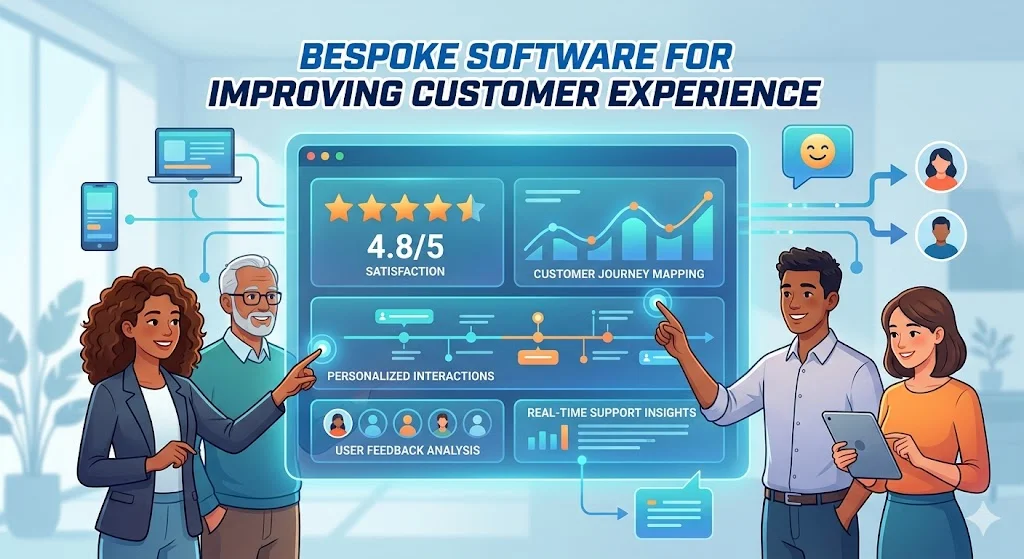
Delivering exceptional customer experiences requires far more than a responsive customer service team. Every department within an organisation contributes to the overall customer journey, including marketing, sales, operations, finance, customer success, and support. When these departments operate in isolation, customer interactions often become fragmented, creating inconsistencies that negatively impact satisfaction and loyalty.
This is why organisations increasingly invest in bespoke software customer experience solutions that connect departments, centralise customer information, and create seamless workflows across the business. Through integrated customer journey software, organisations can ensure that every team works from the same information and contributes to a consistent customer experience.
Rather than managing separate systems that operate independently, businesses can build unified platforms that improve collaboration, eliminate information silos, and streamline customer interactions throughout the entire lifecycle.
Why Departmental Integration Matters
Customers rarely interact with only one department. A typical customer journey may involve marketing campaigns, sales consultations, onboarding processes, support enquiries, billing interactions, and account management activities.
When departments use disconnected systems, customers often experience unnecessary friction.
Common problems include:
- Repeated requests for the same information
- Inconsistent communication
- Delayed responses
- Lost customer data
- Conflicting information from different teams
- Poor visibility into customer history
Integrated software eliminates these issues by providing every department with access to a shared view of customer information and interactions.
Creating a Single Source of Customer Truth
One of the biggest challenges organisations face is managing customer data across multiple platforms. Sales teams may use one system, support teams another, and marketing departments yet another.
This fragmented approach creates duplicate records, outdated information, and operational inefficiencies.
A centralised customer journey software platform creates a single source of truth by consolidating customer data from every touchpoint.
- Customer profiles
- Communication history
- Purchase records
- Support interactions
- Marketing engagement data
- Account information
- Service history
- Customer feedback records
This unified view allows employees to access accurate and up-to-date information whenever they interact with customers.
Connecting Marketing and Sales Teams
Marketing and sales departments play critical roles in shaping the early stages of the customer journey. However, these teams often struggle with disconnected systems that limit visibility into lead activity and customer engagement.
Through integrated bespoke software customer experience solutions, marketing and sales teams can work together more effectively.
- Automatic lead capture
- Lead scoring and qualification
- Campaign performance tracking
- Customer engagement monitoring
- Sales pipeline visibility
- Automated lead handovers
This integration ensures that sales representatives receive complete context regarding each prospect, improving conversion rates and customer interactions.
Improving Customer Onboarding Workflows
Once a customer makes a purchase, onboarding becomes critical to long-term success. Effective onboarding often requires coordination between sales, operations, implementation teams, and customer success departments.
Without integrated systems, onboarding processes can become disorganised and inconsistent.
Custom software enables organisations to automate onboarding workflows and coordinate activities across departments.
- Automated task assignment
- Customer onboarding checklists
- Document collection workflows
- Training resource delivery
- Progress tracking dashboards
- Customer milestone notifications
These capabilities help customers achieve value more quickly while reducing administrative effort.
Enhancing Customer Support and Service Delivery
Support teams often require access to information generated by multiple departments. To resolve issues efficiently, support agents may need visibility into purchase history, contract details, onboarding progress, and previous interactions.
When systems are disconnected, support teams spend valuable time searching for information or requesting updates from other departments.
Integrated customer journey software provides immediate access to relevant information.
- Centralised support records
- Customer history visibility
- Automated ticket routing
- Cross-department collaboration tools
- Knowledge base integration
- Real-time case updates
This improves response times, increases first-contact resolution rates, and enhances overall customer satisfaction.
Aligning Operations with Customer Expectations
Operational teams play an important role in delivering products and services efficiently. Delays, fulfilment issues, or communication gaps can quickly damage customer experiences.
By integrating operational workflows into a bespoke software customer experience platform, organisations gain greater visibility into service delivery processes.
- Order processing automation
- Service scheduling
- Inventory visibility
- Delivery tracking
- Resource allocation management
- Real-time operational updates
These integrations help ensure that customer expectations are met consistently throughout the delivery process.
Improving Communication Between Departments
Internal communication challenges frequently affect customer experiences. When employees lack visibility into activities occurring in other departments, misunderstandings and delays often occur.
Integrated software improves collaboration by providing shared workflows, notifications, and communication tools.
- Cross-department task management
- Automated workflow notifications
- Shared customer records
- Real-time activity updates
- Collaborative case management
- Centralised communication logs
These capabilities reduce internal friction while improving service consistency.
Using Automation to Coordinate Customer Interactions
As customer journeys become more complex, manual coordination between departments becomes increasingly difficult. Important tasks may be overlooked, communications delayed, or follow-ups forgotten.
Through intelligent cx automation, businesses can automatically coordinate activities across multiple teams.
- Automated workflow routing
- Task creation and assignment
- Escalation management
- Approval workflows
- Customer communication triggers
- Progress monitoring and reporting
Automation ensures that customer interactions proceed smoothly without relying on manual intervention at every stage.
Gaining End-to-End Visibility into the Customer Journey
One of the greatest advantages of integrated systems is visibility. Decision-makers gain a comprehensive view of customer interactions across the entire organisation.
Rather than relying on fragmented reports from individual departments, leaders can monitor performance across every stage of the customer journey.
- Customer satisfaction metrics
- Journey completion rates
- Support performance indicators
- Sales conversion data
- Customer retention trends
- Operational efficiency metrics
These insights help organisations identify bottlenecks, improve workflows, and make more informed strategic decisions.
Building a Customer-Centric Organisation
Ultimately, successful customer experience strategies require alignment across the entire business. Every department must work together to deliver consistent, efficient, and personalised interactions.
Investing in custom software development enables organisations to build integrated technology ecosystems that support collaboration, automation, and customer-centric operations.
By connecting departments through advanced customer journey software, businesses can eliminate information silos, improve communication, and create seamless customer experiences from initial engagement through long-term retention. These integrated bespoke software customer experience solutions provide the foundation for stronger relationships, improved operational efficiency, and sustainable business growth.
6. Measuring Customer Experience Improvements
Investing in bespoke software customer experience solutions can transform the way organisations interact with customers, but successful customer experience initiatives require more than implementation alone. Businesses must be able to measure results, identify areas for improvement, and continuously optimise customer journeys to maximise value.
Without clear performance metrics, organisations often struggle to determine whether customer experience strategies are delivering meaningful outcomes. Measuring customer satisfaction, engagement, retention, and operational efficiency provides valuable insights that help businesses refine processes and improve overall performance.
Modern customer journey software provides comprehensive reporting and analytics capabilities that allow organisations to monitor every stage of the customer lifecycle. These insights help leaders make data-driven decisions while ensuring that customer experience initiatives remain aligned with business objectives.
Why Measuring Customer Experience Matters
Customer experience directly influences business performance. Improvements in satisfaction, loyalty, and engagement often lead to increased revenue, stronger retention, and improved brand reputation.
However, customer expectations constantly evolve. Organisations that fail to monitor customer experiences may overlook emerging issues, operational inefficiencies, or changing customer needs.
Regular measurement helps businesses:
- Identify customer pain points
- Improve service quality
- Increase customer retention
- Enhance operational efficiency
- Support strategic decision-making
- Maximise return on technology investments
By continuously tracking performance, organisations can ensure that customer experience improvements generate measurable business value.
Customer Satisfaction Scores (CSAT)
Customer Satisfaction Score (CSAT) remains one of the most widely used metrics for evaluating customer experience performance. It measures how satisfied customers are with a specific interaction, service, or overall experience.
Businesses typically collect CSAT feedback through surveys immediately following customer interactions.
Questions may include:
- How satisfied were you with your experience?
- Did we resolve your issue effectively?
- How would you rate our service?
- How easy was it to complete your task?
Through integrated cx automation, organisations can automatically trigger surveys after support interactions, purchases, onboarding activities, or service completions, ensuring consistent feedback collection.
Net Promoter Score (NPS)
Net Promoter Score (NPS) measures customer loyalty by evaluating how likely customers are to recommend a business to others. It provides valuable insight into overall customer sentiment and long-term relationship strength.
Customers are generally asked:
"How likely are you to recommend our business to a friend or colleague?"
Responses help organisations categorise customers as promoters, passives, or detractors.
Monitoring NPS allows businesses to:
- Track loyalty trends
- Identify customer advocates
- Detect emerging dissatisfaction
- Measure long-term customer sentiment
- Evaluate strategic initiatives
Many organisations include NPS tracking within their bespoke software customer experience platforms to gain ongoing visibility into customer perceptions.
Customer Effort Score (CES)
One of the strongest predictors of customer loyalty is the amount of effort required to interact with a business. Customers prefer experiences that are simple, efficient, and convenient.
Customer Effort Score (CES) measures how easy it is for customers to complete tasks such as:
- Submitting enquiries
- Resolving support issues
- Making purchases
- Accessing information
- Completing onboarding processes
Lower effort typically results in higher satisfaction and stronger retention. Businesses implementing customer journey software often use CES metrics to identify friction points and streamline customer interactions.
Monitoring Customer Retention Rates
Retention is one of the clearest indicators of customer experience success. Satisfied customers are more likely to remain loyal, continue purchasing, and maintain long-term relationships with the organisation.
Tracking retention metrics allows businesses to evaluate whether customer experience improvements are producing sustainable results.
Key retention-related indicators include:
- Customer renewal rates
- Subscription retention
- Repeat purchase frequency
- Contract extension rates
- Customer lifetime value
- Customer churn rates
Strong retention performance often reflects successful customer experience management and effective relationship-building strategies.
Analysing Customer Journey Performance
Every stage of the customer journey presents opportunities for improvement. Modern customer journey software enables businesses to analyse how customers progress through various touchpoints and workflows.
This visibility helps organisations identify where customers encounter delays, confusion, or abandonment.
Common journey metrics include:
- Lead-to-customer conversion rates
- Onboarding completion rates
- Support resolution times
- Customer portal engagement
- Workflow completion percentages
- Customer drop-off points
These insights support continuous optimisation of customer-facing processes.
Evaluating Operational Efficiency
Customer experience improvements often produce significant operational benefits. Automation reduces manual workload, improves process consistency, and enhances employee productivity.
Organisations should measure how customer experience initiatives affect internal performance as well as customer outcomes.
Relevant operational metrics include:
- Average response times
- Support resolution speed
- Employee productivity levels
- Workflow completion times
- Administrative workload reduction
- Service delivery efficiency
These metrics help quantify the operational impact of cx automation and workflow optimisation initiatives.
Using Real-Time Dashboards and Analytics
One of the major advantages of modern bespoke software customer experience platforms is the ability to provide real-time visibility into customer interactions and business performance.
Custom dashboards allow managers and executives to monitor critical metrics without relying on manual reporting processes.
- Customer satisfaction trends
- Support performance indicators
- Sales and conversion metrics
- Customer engagement statistics
- Retention and loyalty data
- Operational performance measures
Real-time reporting enables organisations to identify issues quickly and respond proactively before customer experiences are negatively affected.
Leveraging Customer Feedback for Continuous Improvement
While quantitative metrics provide valuable insights, direct customer feedback remains equally important. Listening to customers helps organisations understand the reasons behind performance trends and uncover opportunities that may not be visible through analytics alone.
Businesses can collect feedback through:
- Customer surveys
- Support interactions
- Review platforms
- Focus groups
- Feedback forms
- Customer interviews
When combined with performance data, feedback provides a comprehensive understanding of customer experiences and helps guide future improvements.
Demonstrating Return on Investment
Executives and stakeholders often require clear evidence that customer experience initiatives are generating measurable business benefits. By tracking key performance indicators, organisations can demonstrate the value delivered through technology investments.
Benefits commonly associated with successful bespoke software customer experience implementations include:
- Increased customer retention
- Higher customer lifetime value
- Improved customer satisfaction
- Greater operational efficiency
- Reduced support costs
- Higher revenue growth
These measurable outcomes help justify continued investment in customer experience innovation and digital transformation initiatives.
Building a Culture of Continuous Optimisation
Customer experience is not a one-time project. Successful organisations treat it as an ongoing strategic priority that evolves alongside customer expectations and business objectives.
Through professional custom software development, businesses can create flexible platforms that continuously collect data, generate insights, and support ongoing improvement efforts.
By combining advanced analytics, real-time reporting, customer feedback, and intelligent cx automation, organisations gain the tools necessary to measure, manage, and continuously enhance customer experiences. The result is a more customer-centric business that delivers higher satisfaction, stronger loyalty, and sustainable long-term growth through effective bespoke software customer experience strategies.

7. Custom Software vs Generic CX Platforms
When businesses begin investing in customer experience technology, one of the most important decisions they face is whether to adopt a generic customer experience platform or invest in a fully customised solution. While off-the-shelf software can provide basic functionality and quick deployment, it often struggles to support unique workflows, specialised customer journeys, and evolving business requirements.
For organisations focused on delivering exceptional customer experiences, choosing the right technology can significantly influence customer satisfaction, operational efficiency, scalability, and long-term business growth. This is where bespoke software customer experience solutions often provide a substantial competitive advantage.
Unlike generic platforms designed for broad audiences, bespoke software is built around the specific goals, processes, and customer expectations of an individual organisation. This enables businesses to create highly personalised experiences while maintaining complete control over functionality and future development.
Understanding Generic Customer Experience Platforms
Generic customer experience platforms are designed to serve a wide range of businesses across multiple industries. These solutions typically include standard features such as customer relationship management, support ticketing, marketing automation, and reporting tools.
For organisations with relatively simple requirements, generic platforms may provide sufficient functionality. They often offer faster implementation timelines and lower initial costs compared to custom software development.
Common advantages include:
- Rapid deployment
- Lower upfront investment
- Pre-built functionality
- Vendor-supported updates
- Established user communities
However, these benefits often come with limitations that become more noticeable as businesses grow and customer experience requirements become more sophisticated.
The Limitations of Generic CX Platforms
Although generic platforms provide broad functionality, they are rarely designed around the unique requirements of a specific organisation. Businesses frequently encounter challenges when attempting to align standard software with specialised customer journeys and operational processes.
Common limitations include:
- Restricted workflow customisation
- Limited automation flexibility
- Generic reporting structures
- Inconsistent integration capabilities
- Feature bloat from unnecessary functionality
- Difficulty adapting to changing business needs
As organisations expand, these limitations often result in manual workarounds, fragmented processes, and reduced operational efficiency.
Why Businesses Choose Bespoke Software
Businesses invest in bespoke software customer experience solutions because they require technology that aligns precisely with their customer journey strategy. Rather than adjusting processes to fit software limitations, organisations can build platforms that support their preferred workflows and service models.
Custom software allows businesses to create experiences that reflect their brand identity and customer expectations.
- Custom onboarding workflows
- Industry-specific service processes
- Advanced customer segmentation
- Personalised communication strategies
- Unique customer engagement programs
- Custom analytics and reporting
These capabilities help organisations deliver experiences that competitors using generic platforms may struggle to replicate.
Greater Flexibility for Customer Journey Management
Every organisation serves customers differently. A healthcare provider, financial institution, educational organisation, and logistics company each require distinct customer journeys and operational workflows.
Generic platforms often force businesses into predefined structures that may not align with customer expectations.
Through advanced customer journey software, organisations can create flexible workflows tailored to their exact requirements.
- Dynamic workflow routing
- Custom service pathways
- Role-based customer experiences
- Industry-specific automation
- Flexible approval processes
- Personalised engagement strategies
This flexibility allows businesses to continuously optimise customer journeys as requirements evolve.
Advanced Automation Capabilities
Automation plays a critical role in delivering efficient customer experiences. While many generic platforms include automation features, they are often limited to predefined scenarios.
Custom-built systems allow organisations to implement sophisticated cx automation workflows that align with unique operational requirements.
- Behaviour-triggered communications
- Custom escalation workflows
- Automated customer success programs
- Advanced lead qualification processes
- Intelligent support routing
- Multi-stage engagement workflows
These automation capabilities improve efficiency while enhancing personalisation and service consistency.
Improved Integration Across Business Systems
Most organisations rely on multiple software platforms to manage daily operations. Customer experience systems often need to connect with accounting software, ERP platforms, CRM systems, marketing tools, support applications, and operational databases.
Generic platforms may offer limited integration options or require additional middleware solutions.
With bespoke software customer experience platforms, integrations can be designed specifically around the organisation’s technology ecosystem.
- CRM integrations
- ERP connectivity
- Marketing platform integration
- Customer portal synchronisation
- Third-party API connections
- Centralised data management
These integrations create a unified environment that improves visibility and operational efficiency.
Long-Term Cost Considerations
Many businesses initially choose generic platforms because of lower upfront costs. However, long-term expenses often increase due to subscription fees, licensing costs, integration requirements, and productivity losses caused by software limitations.
Custom software typically involves higher initial investment but may provide greater long-term value by eliminating recurring licensing fees and improving operational efficiency.
Potential long-term benefits include:
- Reduced manual processing costs
- Improved employee productivity
- Greater workflow efficiency
- Lower software dependency risks
- Enhanced customer retention
- Higher return on investment
For organisations focused on long-term growth, these advantages often outweigh the initial development costs.
Supporting Future Business Growth
Customer expectations, market conditions, and business requirements continuously evolve. Technology platforms must be able to adapt accordingly.
Generic software vendors determine product roadmaps based on broad market priorities, which may not align with the specific needs of an individual organisation.
Custom software provides significantly greater control over future development. New features, integrations, workflows, and customer engagement strategies can be implemented as business requirements change.
This adaptability ensures that organisations remain competitive while continuously improving customer experiences.
The Strategic Advantage of Bespoke Customer Experience Solutions
Ultimately, the decision between generic software and custom software depends on organisational goals, complexity, and long-term strategy. While generic platforms may provide a suitable starting point for some businesses, organisations seeking differentiation, flexibility, and advanced customer engagement capabilities often achieve better outcomes through bespoke solutions.
By investing in professional custom software development, businesses gain the ability to create customer experience platforms tailored precisely to their operational requirements and customer expectations.
Through intelligent automation, advanced integrations, personalised customer journeys, and scalable architecture, bespoke software customer experience solutions deliver significant advantages over generic platforms. They provide the flexibility needed to adapt to changing market demands, strengthen customer relationships, and create sustainable competitive advantages that support long-term business success.
8. Frequently Asked Questions
What is bespoke software customer experience?
Bespoke software customer experience refers to custom-built software solutions specifically designed to improve how customers interact with a business. Unlike generic platforms, bespoke systems are tailored to support unique customer journeys, automate interactions, personalise communications, and streamline customer-facing processes across multiple departments.
How does bespoke software improve customer experience?
Custom software improves customer experience by removing friction from customer journeys, automating repetitive processes, providing faster responses, and delivering more personalised interactions. Businesses can create workflows that align with customer expectations while ensuring consistency across every touchpoint.
What is customer journey software?
Customer journey software is technology designed to manage, monitor, and optimise every stage of the customer lifecycle. It helps businesses track interactions, automate workflows, centralise customer information, and improve engagement from initial enquiry through long-term retention.
Why is customer experience important for business growth?
Customer experience directly affects customer satisfaction, retention, referrals, and revenue growth. Businesses that consistently deliver positive experiences often achieve higher customer loyalty, stronger brand reputation, and improved long-term profitability compared to competitors with poor customer experiences.
Can bespoke software personalise customer interactions?
Yes. One of the primary advantages of bespoke software customer experience solutions is the ability to personalise customer interactions at scale. Businesses can tailor communications, onboarding journeys, product recommendations, support processes, and marketing campaigns based on customer preferences and behaviour.
How does CX automation help businesses?
CX automation helps organisations reduce manual workload while improving consistency and efficiency. Automated workflows can manage customer enquiries, onboarding tasks, appointment scheduling, follow-ups, notifications, feedback collection, and support processes without requiring constant employee intervention.
Can customer journey software integrate with existing systems?
Absolutely. Modern customer journey platforms can integrate with CRM systems, ERP software, accounting tools, marketing automation platforms, customer portals, helpdesk solutions, and various third-party applications. These integrations create a unified view of customer interactions across the organisation.
What industries benefit most from customer experience software?
Almost every industry can benefit from improved customer experience management. Common sectors include:
- Professional services
- Healthcare
- Financial services
- Education
- Construction
- Manufacturing
- Retail and eCommerce
- Technology companies
- Logistics and transportation
- Government organisations
How does bespoke software improve customer retention?
Custom software helps improve retention by delivering personalised experiences, reducing service delays, improving communication, and proactively identifying customer needs. Satisfied customers are more likely to remain loyal, renew contracts, and continue purchasing products or services.
Can bespoke software support customer onboarding?
Yes. Custom onboarding workflows are one of the most common applications of customer journey software. Businesses can automate onboarding tasks, deliver personalised training materials, track customer progress, and ensure new customers achieve value quickly.
How does customer journey software help support teams?
Support teams gain access to complete customer histories, interaction records, purchase information, and previous support requests. This visibility allows agents to resolve issues faster, improve first-contact resolution rates, and provide more personalised assistance.
What role does data play in customer experience management?
Customer data is essential for understanding behaviour, preferences, and engagement patterns. Bespoke software centralises data from multiple sources and uses it to improve personalisation, automate workflows, generate insights, and support informed decision-making.
How does automation improve customer response times?
Automation can instantly route enquiries, trigger notifications, schedule follow-ups, assign tasks, and provide customers with relevant information. This reduces delays and ensures customers receive timely responses without waiting for manual processing.
Is bespoke software scalable?
Yes. Custom software is typically designed with scalability in mind. As organisations grow, new users, workflows, integrations, departments, and customer requirements can be added without requiring a complete system replacement.
What is the difference between bespoke software and generic CX platforms?
Generic platforms are designed for broad audiences and offer standard functionality. Bespoke software is developed specifically for a business and can support unique customer journeys, specialised workflows, advanced integrations, and personalised experiences that generic solutions often cannot provide.
Can bespoke software improve operational efficiency?
Yes. By automating workflows, centralising information, reducing manual tasks, and improving collaboration between departments, businesses can significantly improve operational efficiency while simultaneously enhancing customer satisfaction.
How is customer satisfaction measured?
Businesses commonly use metrics such as Customer Satisfaction Score (CSAT), Net Promoter Score (NPS), Customer Effort Score (CES), retention rates, support resolution times, and customer feedback surveys to evaluate customer experience performance.
How long does it take to develop bespoke customer experience software?
Development timelines depend on project scope, complexity, integrations, and feature requirements. Smaller projects may take several months, while enterprise-level customer experience platforms can require more extensive planning, development, testing, and deployment phases.
Can bespoke software provide a competitive advantage?
Absolutely. Businesses that invest in bespoke software customer experience solutions can deliver unique, highly personalised customer journeys that competitors using generic platforms may struggle to replicate. This differentiation often leads to improved customer loyalty, stronger retention, and increased market competitiveness.
Why should businesses invest in customer experience technology?
Customer expectations continue to rise across every industry. Investing in advanced customer journey software and intelligent cx automation enables organisations to deliver faster, more personalised, and more consistent experiences. This improves customer satisfaction, increases loyalty, drives revenue growth, and creates a foundation for long-term business success.